Freight Forwarder

Freight Forwarder

Digital Transformation in Logistics: From Paper to Real-Time Satellite Tracking.

The world of logistics, once characterized by stacks of paperwork, manual entries, and often frustrating delays, has undergone a profound metamorphosis. This shift, known as Digital Transformation, has revolutionized how goods move across the globe, evolving from a cumbersome, opaque process to a highly efficient, transparent, and responsive ecosystem. At the heart of this transformation lies the journey from the tangible, error-prone world of paper manifests to the dynamic, precise realm of real-time satellite tracking. The Dawn of a New Era in Logistics For decades, logistics operations relied heavily on traditional methods. Shipments were documented on paper, communication happened over phone calls and faxes, and tracking often involved educated guesses rather than precise data. The lack of granular visibility led to inefficiencies, miscommunications, and a reactive approach to problem-solving. However, the advent of digital technologies has ushered in an era where data, connectivity, and automation are paramount. The Pain Points of Traditional Logistics The pre-digital era presented numerous challenges that hindered operational efficiency and customer satisfaction: Lack of Visibility: Once a truck left the warehouse, its exact location and status often remained unknown until it reached its next checkpoint. Manual Errors: Human error in data entry, paperwork, and inventory management was a common and costly occurrence. Slow Communication: Information transfer between different stakeholders (shippers, carriers, receivers) was often delayed and fragmented. Inefficient Resource Allocation: Without real-time data, optimizing routes, fuel consumption, and fleet utilization was extremely challenging. Difficulty in Auditing and Compliance: Tracing the history of a shipment for auditing or regulatory compliance was a laborious, paper-intensive task. Key Pillars of Digital Transformation The transition from paper-based systems to advanced digital platforms is built upon several foundational technologies that enable automation, data capture, and connectivity. From Manual Entry to Automated Data Capture Barcodes and RFID: The First Steps The initial wave of digital change began with technologies designed to automate data capture. Barcodes provided a simple, effective way to identify products and track them at various points in the supply chain, reducing manual errors significantly. Following this, RFID (Radio-Frequency Identification) tags offered a more advanced solution, allowing for automated scanning of multiple items simultaneously without direct line-of-sight, enhancing inventory management and speed. IoT and Sensors: A Deeper Dive The rise of the Internet of Things (IoT) has propelled data capture to an unprecedented level. IoT sensors, embedded in vehicles, containers, and even individual packages, can collect a wealth of real-time information. This includes not just location, but also critical environmental parameters like temperature, humidity, shock, and vibration. For industries dealing with perishables or sensitive goods, this granular data is invaluable, enabling proactive intervention to prevent damage or spoilage. The Rise of Real-Time Tracking and Visibility GPS and Satellite Tracking: The Game Changer Perhaps the most impactful innovation in logistics digital transformation is the ubiquitous adoption of GPS (Global Positioning System) and satellite tracking. These technologies provide precise, real-time location data for vehicles, vessels, and even individual assets anywhere on Earth. For logistics, this means: Unprecedented Visibility: Knowing the exact location of every asset at any given moment. Accurate ETAs: Providing precise estimated times of arrival, improving planning for recipients. Enhanced Security: Monitoring routes and detecting unauthorized deviations or stops. Proactive Problem Solving: Identifying potential delays or issues before they escalate, allowing for quick rerouting or adjustments. Cloud Platforms and Data Analytics The sheer volume of data generated by IoT devices and tracking systems would be overwhelming without robust infrastructure to process it. Cloud computing platforms provide the scalable storage and processing power necessary to handle this influx of information. Coupled with data analytics, this data is transformed into actionable insights. Predictive analytics, for instance, can forecast demand, optimize routes based on historical traffic patterns, and even predict potential equipment failures, moving logistics from reactive to proactive management. Benefits of Digital Transformation in Logistics The shift from paper to real-time satellite tracking and beyond yields a multitude of advantages across the entire logistics spectrum: Enhanced Efficiency and Productivity: Automation of routine tasks, optimized routing, and faster information flow drastically reduce operational bottlenecks and manual labor. Improved Visibility and Transparency: All stakeholders gain end-to-end visibility of the supply chain, fostering trust and enabling better collaboration. Cost Reduction: Optimized routes lead to lower fuel consumption, fewer idle times, reduced errors save money, and predictive maintenance prevents costly breakdowns. Better Customer Experience: Accurate ETAs, proactive updates on shipment status, and fewer delays lead to higher customer satisfaction and loyalty. Greater Agility and Resilience: The ability to adapt quickly to disruptions (e.g., weather, traffic, geopolitical events) and make informed decisions on the fly is greatly enhanced. Sustainability: Route optimization and efficient resource utilization contribute to a smaller carbon footprint and more environmentally friendly operations. The Road Ahead: Future Trends The digital transformation in logistics is an ongoing journey, with new technologies continuously emerging to push the boundaries of efficiency and intelligence. Future trends include: AI and Machine Learning: Further refining predictive analytics, automating decision-making (e.g., dynamic pricing, optimal load balancing), and enhancing security protocols. Blockchain: Providing an immutable and transparent ledger for all transactions and events in the supply chain, enhancing trust, traceability, and reducing fraud. Autonomous Vehicles and Drones: Revolutionizing last-mile delivery, long-haul trucking, and warehouse operations, promising even greater efficiency and speed. Digital Twins: Creating virtual replicas of physical assets and supply chain processes to simulate scenarios, optimize performance, and predict outcomes without real-world risk. The journey from paper-based ledgers and guesswork to interconnected networks and real-time satellite tracking is nothing short of revolutionary. Digital transformation has not only addressed the historical pain points of logistics but has also unlocked unprecedented opportunities for efficiency, cost savings, and customer satisfaction. As technology continues to evolve, the logistics industry stands poised for an even smarter, more connected, and highly autonomous future, leaving the age of paper firmly in the past.

Freight Forwarder

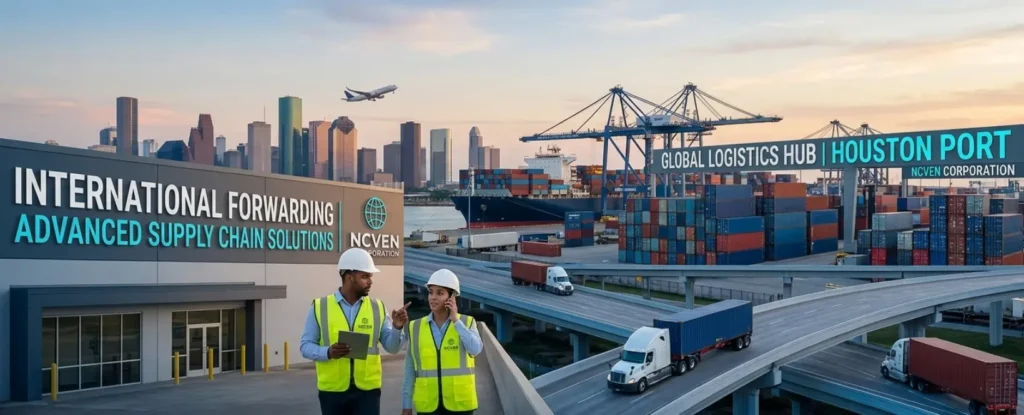
International Forwarding Houston: A Strategic Logistics Guide for Modern Businesses

In the complex ecosystem of foreign trade, efficiency is not an option; it is a competitive advantage. When we speak of International Forwarding Houston, we are referring to much more than moving containers from point A to point B; we are talking about synchronizing the infrastructure of the busiest port in the United States with your company’s global distribution needs. The Critical Role of International Forwarding in Texas Houston has established itself as the preferred logistics hub for companies operating in the Americas and Europe. However, navigating Port of Houston regulations or air cargo requirements at IAH requires deep technical knowledge. A solid International Forwarding service enables: Route Optimization: Selecting the fastest sea or air routes to reduce lead times. Cargo Consolidation: LCL strategies for small and medium-sized enterprises looking to reduce costs. Total Visibility: Constant monitoring of the status of goods. Why is Houston the Hub of International Forwarding? Houston’s geographical location is unbeatable. As specialists in Freight Forwarding in Houston, we know that the city’s multimodal connectivity allows cargo to flow toward the Midwest, the East Coast, and, of course, key markets in the Caribbean and Latin America. Customs Clearance: The Key Piece International Forwarding in Houston is not complete without impeccable customs management. Border delays can cost thousands of dollars in fines and storage. Therefore, having a partner who manages documentation and complies with local regulations is essential for any successful operation. Strategies for Efficient International Logistics To maximize the impact of your supply chain, consider the following points: Cost Auditing: Do not look only at the freight rate; analyze port and drayage charges. Cargo Insurance: In international transport, protecting your investment is paramount. Technology and Data: Use platforms that allow you to make decisions based on real data regarding your shipments. Boost Your Global Reach with NCVEN Moving cargo globally requires precision, a network of contacts, and local experience. By choosing an International Forwarding service in Houston, you are ensuring that your merchandise is in the hands of experts who understand both the local Texas market and the demands of global trade. Ready to take your cargo to the next level? At NCVEN Corporation, we are experts in connecting your products with the world. Request a personalized consultation today and discover how we can optimize your international logistics.

Scroll to Top